How to Plant Daikon Radish Seeds
Daikon radish seeds should be planted in an area with full sun or partial shade with loose, well-draining soil. In preparation for planting, remove any rocks from the soil to ensure strong and even root development and add organic matter such as compost or leaf mulch.
We typically recommend direct seeding your radishes in the garden. Most root crops, radishes included, do not do well being transplanted. And because they are so quick to mature - starting them inside is unnecessary. Plant your daikon radish seeds directly in the garden about ¼ inch deep and one inch apart. As they germinate, and they typically germinate fairly quickly, thin the seedlings until they are four to six inches apart.
Like most seeds, daikon radishes need consistent and regular watering in order to germinate effectively. We recommend watering everyday until germination. After germination, daikon radishes will benefit from at least an inch of water per week.
When to Plant Daikon Radish Seeds
Daikon radishes are a cool weather crop and do best when planted for a spring or fall harvest. In the spring, radish seeds can be planted as soon as the soil is workable - typically four to six weeks before the last frost. In the fall, they can be sown four to six weeks before the first frost. Warmer weather causes radishes to bolt and the roots to become woody and inedible.
Radishes are extremely frost tolerant and will germinate in temperatures as low as 40 degrees Fahrenheit, this makes them an excellent first crop for the garden. To seed them even earlier, utilize cold frames or row cover to protect tender seedlings from frosts. During this time, and throughout the fall, continuously sow radishes every ten days or so to extend and maximize your harvest.
Where to Plant Daikon Radish Seeds
Daikon radish seeds can be planted in a spot with full sun to partial shade. If there is too much shade, your crops may put more work into producing foliage than large, impressive roots. While most radishes can be hidden and snaked in between other crops due to their small size and maturity speed, keep in mind that daikons are quite large - so they may need more space or can be tucked in between crops with more space between them. They will love rich, well-draining soil. Before planting, soil can be amended with plenty of compost and organic matter, especially if you deal with clay soils like we do here in zone seven. We recommend rotating all of your crops. Try to select a location that hasn’t had other radishes in it in the last two to three years.
How Often to Water Daikon Radish Seeds
As always, it is really important to water regularly and maintain soil dampness from the time you plant a seed until it is a more established plant at which point it is better equipped to handle environmental stress. Not watering enough is the number one reason people struggle with germination and survival of seedlings!
How to Harvest Daikon Radishes
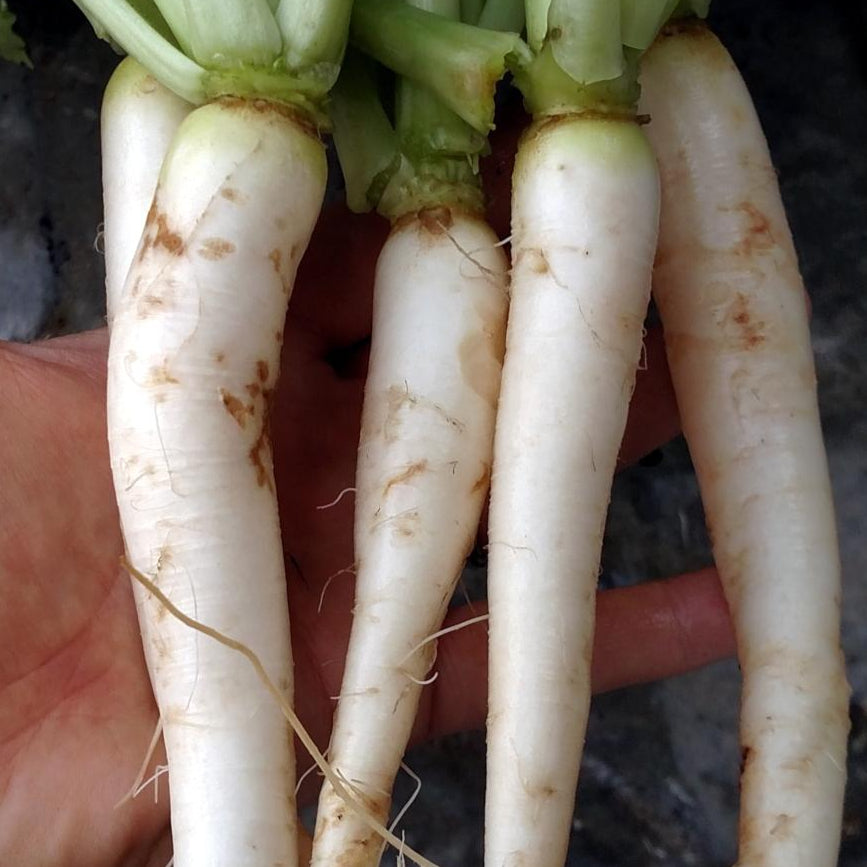
Harvesting daikon radishes is not complicated but there are some things to keep in mind when pulling up these massive roots. They can be harvested for eating at any stage. The larger they are, the deeper they are, and the more difficult it can be to pull them from the ground - depending on how compacted your soil is.
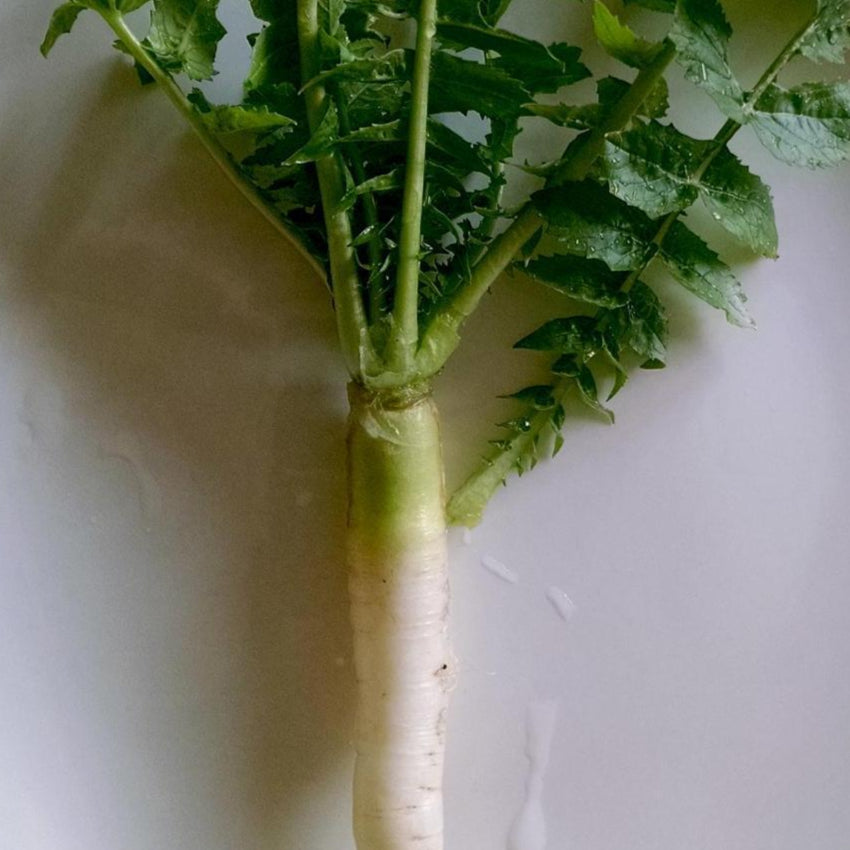
These radishes produce hefty foliage so you can typically pull them from the ground with your hand around the crown of the plant. For larger, more mature plants, consider using a digging fork inserted in the soil at least eight inches away from the plant. Lift the soil around the plant, which will loosen the soil and make it easier to pull the radish from the ground. Be sure to harvest all of your radishes before it gets too hot in the spring (when they will bolt) or too cold in the fall (not too many 20 degree nights in a row.)