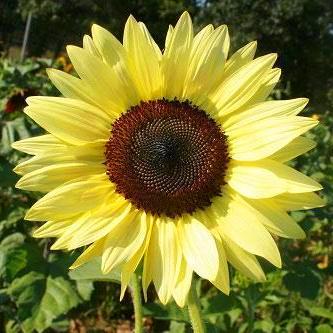
When to plant Lemon Queen Sunflower Seeds
Sunflower Seeds can be directly sown outside after all danger or frost has passed. Sunflowers do the best when seeded in a raised bed or in ground beds.
In order for sunflower seeds to germinate, the seed coat needs to be broken down and in most cases this is done with adequate moisture. As the seed is taking up water, it begins to swell and then breaks open the seed coat. The root emerges first and takes up the job of absorbing moisture. Eventually the baby sunflower sprout will appear! Not watering enough is the number one reason gardeners struggle with sunflower seed germination and survival of sunflower seedlings!
How to plant Lemon Queen Sunflower Seeds
Plant Lemon Queen Sunflower seeds one inch deep and space seeds four to six inches apart. Once sunflower seeds are at least six inches tall, thin sunflower seedlings to 12 inches apart for mature spacing. When thinning Lemon Queen seeds it is important to choose the strongest sunflower seedlings to keep.
What do Lemon Queen sunflower seeds look like
Lemon Queen Sunflower seeds are much smaller than your average sunflower seeds you see for snacking, only ½’’ long and ¼ inch wide. Lemon Queenseeds are black or dark brown, and known as an ornamental variety making them different from commercial sunflower seeds.
Common Lemon Queen Sunflower growing challenges
Besides not getting enough water, another considerable issue with sunflower seed germination is wildlife interference. Birds, squirrels, and other wildlife love to eat sunflower seeds and your garden can be a great snack for wildlife. If you are having issues with wildlife eating your sunflower seeds before they are able to germinate and sprout, start sunflower seeds indoors in seed starting trays. Sunflower seedlings should be planted outside after they develop their first set of true leaves and all danger of frost has passed.
Mature Lemon Queen Sunflower seed heads are another great snack target for wildlife! You can manage these issues by covering the heads with pollination bags or other white fabric to protect the seeds from wildlife as they mature to harvest.
Sunflowers are also susceptible to many common fungal diseases including, downy mildew, powdery mildew, and fungal rust. These fungal diseases typically show up later in the season. Fungal diseases are best treated with proactive steps such as watering in the morning to reduce moisture sitting overnight and planting at appropriate sunflower spacing to encourage proper airflow. If you start to notice fungal diseases showing up on your sunflower leaves, remove the leaves and dispose of the leaves by burning or putting them in the trash. It is best not to dispose of fungal sunflower leaves in your compost to reduce the spread of the fungal disease. Keep in mind many fungal issues will not cause problems with flower or seed production. Fungal diseases can kill the sunflower plant but typically the fungal diseases show up late enough in the season that your sunflowers will still mature!
Benefits of Growing Lemon Queen Sunflowers
Besides the beauty of Lemon Queen Sunflowers, there are many other reasons why you may want to include this regal crop in your garden! Sunflowers have been shown to be effective in phytoremediation. Phytoremediation is the process of using plants to clean up contaminates in the environment. Sunflowers can take up metals, pesticides, and other pollutants and remove them from the soil. Sunflower plants intended for this purpose should not be ingested or composted and should be disposed of in the trash.
Sunflowers can assist in the growth of other plants through a practice called companion planting. Companion planting is simply the practice of interplanting different crops that may benefit each other in a myriad of ways whether it’s pest control, nutrient sharing, or encouraging pollination. Sun flowers, due to their height and stature, can help to offer shade to crops that may easily become sun stressed such as beans, basil, or fall crops of lettuce, spinach, and kale. It’s also sometimes considered the fourth sister of the well known three sisters - corn, beans, and squash - as they can help hold up heavy corn stalks and protect them from wind damage, Just keep in mind, when companion planting with sunflowers, that they are heavy feeders so when planted near other heavy feeders, some extra fertilizer may be necessary for adequate development of all crops.